
FDA Clears Oral Semaglutide as a Pill-Based Glp-1 Option for Weight Loss
The FDA approval of oral semaglutide marks a major breakthrough as the first GLP-1 pill available for weight loss, offering a needle-free treatment option. This oral medication helps regulate appetite and supports weight management when combined with healthy lifestyle changes. At Centra Internal Medicine, Dr. Manish Sahni, MD, provides personalized care to help patients safely and effectively incorporate this FDA-approved option into their weight loss journey. For more information, please contact us or schedule an appointment online. We have convenient locations in Sun City, AZ, Phoenix, AZ, Prescott, AZ, and Buckeye, AZ.
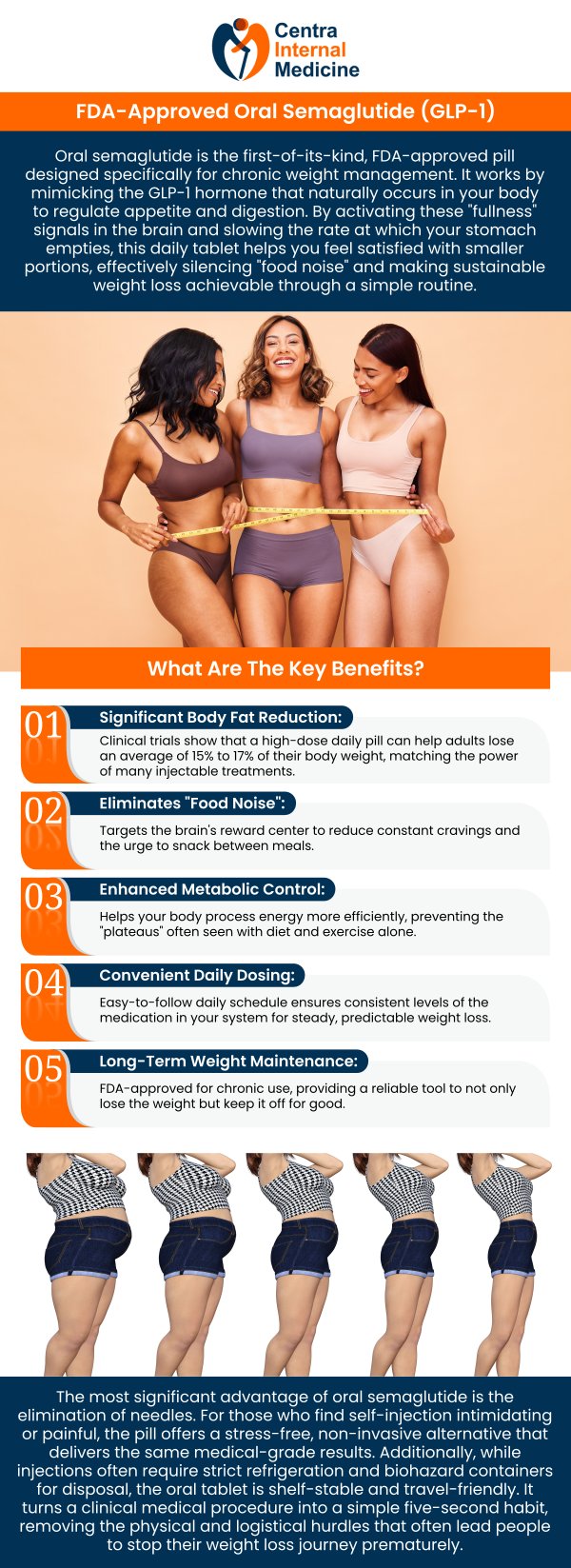
Table of Contents:
Is oral semaglutide approved for use in adolescents or teenagers under medical supervision?
What is the likelihood of weight regain after discontinuing oral semaglutide?
Can oral semaglutide be safely used in patients with prediabetes or metabolic syndrome?
What monitoring is recommended for patients taking oral semaglutide in a primary care or internal medicine setting?
How does oral semaglutide affect gastrointestinal function in patients with existing GI conditions?
Are there considerations for prescribing oral semaglutide in patients with cardiovascular risk factors?
How long should patients remain on oral semaglutide to support sustained weight management?
Can oral semaglutide be integrated into long-term chronic disease management plans?
Does oral semaglutide impact thyroid, pancreatic, or renal health monitoring?
How does oral semaglutide fit into preventive care strategies for obesity-related conditions?
Semaglutide as a Pill-Based GLP-1 Option for Weight Loss with Care Led by Dr. Manish Sahni, MD, at Centra Internal Medicine
The FDA has officially approved oral semaglutide for chronic weight management, marking a historic milestone in obesity medicine. This is the first time a GLP-1 receptor agonist—previously available only as an injection—is offered as a daily pill. Designed for adults with obesity or overweight individuals with weight-related complications, this oral option mimics natural hormones to regulate appetite and reduce cravings. Clinical trials demonstrate that it delivers weight loss efficacy comparable to injectable therapies like Wegovy. This approval significantly expands access to effective treatment, offering a needle-free alternative for patients seeking to improve their metabolic health and achieve long-term weight reduction.
Currently, the FDA approval for oral semaglutide as a weight loss treatment is specifically indicated for adults aged 18 and older. While the injectable form of semaglutide (Wegovy) has been approved for adolescents aged 12 and older with obesity, the oral pill formulation has not yet received the same pediatric indication. The pharmacokinetics and absorption of the oral tablet differ from the injection, and clinical trials focusing specifically on the safety and efficacy of the pill in pediatric populations are distinct from adult studies.
For parents and teenagers seeking medical weight management, the injectable GLP-1 receptor agonist remains the standard FDA-approved option. However, physicians at Centra Internal Medicine can discuss the evolving landscape of obesity medicine. In some cases, once a patient turns 18, transitioning from the adolescent-approved injectable to the daily oral pill may be a viable strategy.
Obesity is recognized as a chronic, relapsing disease, much like hypertension or asthma. Consequently, discontinuation of oral semaglutide often leads to weight regain. Clinical data indicate that when patients stop taking the medication, the biological suppression of appetite and the regulation of satiety signals are removed. Without this physiological support, the body’s natural metabolic drive often attempts to return to its previous “set point” weight, leading to the recurrence of cravings and increased caloric intake.
Research suggests that most patients who discontinue GLP-1 therapies regain a significant portion of their lost weight within a year, particularly if they do not maintain rigorous lifestyle changes.
Yes, oral semaglutide is an exceptionally strong candidate for patients with prediabetes or metabolic syndrome. These conditions are characterized by insulin resistance, excess abdominal weight, and elevated blood sugar levels—mechanisms that oral semaglutide directly targets. By mimicking the GLP-1 hormone, the medication not only induces weight loss but also enhances insulin sensitivity and lowers blood glucose levels, effectively treating the underlying drivers of metabolic syndrome.
For patients with prediabetes, using oral semaglutide can be a proactive measure to prevent the progression to full-blown Type 2 diabetes. The weight loss achieved—often exceeding 15% of body weight—can reverse many of the markers of metabolic syndrome, such as high triglycerides and elevated blood pressure. When prescribed in an internal medicine setting, this medication serves a dual purpose: treating obesity while simultaneously correcting metabolic dysfunction, thereby offering a comprehensive approach to preventing future chronic disease.
While oral semaglutide is generally safe, appropriate monitoring is essential to ensure efficacy and early detection of potential adverse effects. In a primary care setting like Centra Internal Medicine, the initial phase involves monthly follow-ups during the dose-escalation period. Vital signs, particularly heart rate and blood pressure, are checked regularly, as GLP-1 agonists can slightly increase resting heart rate while beneficially lowering blood pressure.
Laboratory monitoring is also standard. A comprehensive metabolic panel (CMP) is typically drawn to assess kidney function, as dehydration from gastrointestinal side effects can strain the kidneys. Providers also monitor liver enzymes and lipid panels to track metabolic improvements. Although rare, patients are educated to watch for symptoms of pancreatitis or gallbladder issues. For patients with type 2 diabetes, HbA1c levels are closely tracked to adjust any concurrent diabetes medications (like insulin or sulfonylureas) to prevent hypoglycemia. This structured monitoring ensures the treatment remains safe as the patient’s body adapts to the medication.
The mechanism of action for oral semaglutide involves delaying gastric emptying, which keeps food in the stomach longer to prolong the sensation of fullness. For patients with a healthy GI tract, this is the desired effect. However, for patients with pre-existing gastrointestinal conditions such as gastroparesis (paralyzed stomach), severe gastroesophageal reflux disease (GERD), or inflammatory bowel disease (IBD), this mechanism can exacerbate symptoms.
Patients with a history of severe gastroparesis are generally advised against using GLP-1 receptor agonists. For those with mild reflux or IBS, the medication can still be used but requires careful management. Symptoms like nausea, bloating, and constipation are most common during the initiation phase.
Far from being a risk, oral semaglutide is increasingly viewed as a protective agent for patients with cardiovascular risk factors. Recent FDA approvals have expanded the indication for semaglutide to include the reduction of major adverse cardiovascular events (MACE), such as heart attack, stroke, and cardiovascular death, in adults with established cardiovascular disease and obesity. This makes it a preferred option for high-risk patients.
However, clinical consideration is still required. Because the medication can cause gastrointestinal side effects leading to volume depletion, patients on diuretics or blood pressure medications need careful monitoring to avoid hypotension or acute kidney injury. Additionally, while the net effect on the heart is positive, the medication can cause a slight increase in resting heart rate.
The current medical consensus views obesity as a chronic condition requiring chronic treatment. Therefore, patients should expect to remain on oral semaglutide for the long term, potentially indefinitely, to support sustained weight management. Just as a patient with hypertension takes blood pressure medication daily to prevent a stroke, a patient with obesity takes semaglutide to prevent the recurrence of weight gain and its associated complications.
Short-term use is rarely effective because the underlying physiological drivers of obesity—such as hormonal imbalances in appetite regulation—often return once the medication is stopped. Long-term data shows that continued use helps maintain the “new” lower body weight and sustains the metabolic improvements in blood sugar and cholesterol.
Absolutely. Oral semaglutide is ideally suited for integration into comprehensive chronic disease management plans. In internal medicine, patients rarely present with obesity in isolation; it is frequently comorbid with hypertension, dyslipidemia, fatty liver disease, and sleep apnea. Oral semaglutide acts as a “keystone” therapy because treating obesity often leads to significant improvements in these other conditions.
For example, a patient managing hypertension may find that after six months on oral semaglutide, their weight loss allows them to reduce or even discontinue their blood pressure medications. Similarly, patients with sleep apnea may see a reduction in the severity of their condition. Integrating this medication involves coordinating care so that as the patient’s weight changes, their other treatments are adjusted dynamically.
Yes, specific safety monitoring regarding the thyroid, pancreas, and kidneys is a standard part of the prescribing protocol. Regarding the thyroid, oral semaglutide has a “boxed warning” regarding thyroid C-cell tumors, observed in rodent studies. While this has not been conclusively confirmed in humans, the medication is contraindicated in patients with a personal or family history of Medullary Thyroid Carcinoma (MTC) or Multiple Endocrine Neoplasia syndrome type 2 (MEN 2).
For the pancreas, there is a small potential risk of pancreatitis. Patients are monitored for signs such as severe, persistent abdominal pain radiating to the back. Regarding renal health, the medication itself is not nephrotoxic, but the side effects (vomiting, diarrhea) can lead to dehydration, which may injure the kidneys. Therefore, renal function (creatinine and GFR) is monitored via routine blood work, especially in older adults or those on other medications affecting kidney function. This vigilance allows providers to mitigate risks while the patient benefits from weight loss.
Oral semaglutide represents a paradigm shift in preventive care. Traditionally, medicine has focused on treating the consequences of obesity—stenting blocked arteries, dialyzing failing kidneys, or medicating diabetes. Oral semaglutide allows physicians to intervene upstream, addressing the root cause before these severe complications develop. By effectively reducing visceral fat, the medication lowers systemic inflammation and insulin resistance, which are the precursors to most chronic diseases.
In a preventive strategy, this medication is used not just to improve appearance, but to alter the trajectory of a patient’s health span. For a middle-aged patient with creeping weight gain and a family history of heart disease, starting oral semaglutide can be the decisive factor that prevents a future heart attack. It effectively serves as a preventive shield, reducing the long-term burden of disease and shifting the focus of healthcare from reactive crisis management to proactive health preservation.
The FDA clearance of oral semaglutide introduces the first pill-based GLP-1 option for weight loss, offering patients an alternative to injectable treatments. This once-daily tablet supports appetite regulation and digestion, making weight management more accessible for individuals who prefer an oral medication.
Oral semaglutide works by mimicking the natural GLP-1 hormone to promote fullness and reduce calorie intake when combined with healthy lifestyle changes. Its effectiveness depends on proper dosing and medical supervision to ensure safe absorption and consistent results.
At Centra Internal Medicine, care led by Dr. Manish Sahni, MD, focuses on personalized weight management plans. Patients receive thorough evaluations, ongoing monitoring, and lifestyle guidance to support sustainable weight loss using FDA-cleared oral semaglutide as part of a comprehensive approach. For more information, please contact us or schedule an appointment online. We have convenient locations in Sun City, AZ, Phoenix, AZ, Prescott, AZ, and Buckeye, AZ, Westpark AZ, Liberty AZ, Peoria AZ, Glendale AZ, Diamond Valley AZ, Iron Springs AZ, Bumstead AZ, El Mirage AZ, and surrounding areas.
Check Out Our 5 Star Reviews


Additional Services You May Need
▸ Aesthetics
▸ Allergies
▸ Annual Physical Exams
▸ Gynecological Exams
▸ High Blood Pressure
▸ Immunizations
▸ Joint Injections
▸ Lab Services
▸ Migraines
▸ Minor Surgical Procedures
▸ Pre-op Clearance Exams
▸ Double Chin
▸ Acute Disease Management
▸ CDL Physical Exam
▸ Tirzepatide
▸ Phentermine
▸ Nutritional Coaching
▸ DOT Physicals
▸ FDA-Approved Oral Semaglutide (GLP-1)

Additional Services You May Need
▸ Aesthetics
▸ Allergies
▸ Annual Physical Exams
▸ Gynecological Exams
▸ High Blood Pressure
▸ Immunizations
▸ Joint Injections
▸ Lab Services
▸ Migraines
▸ Minor Surgical Procedures
▸ Pre-op Clearance Exams
▸ Double Chin
▸ Acute Disease Management
▸ Mole Removal
▸ Primary Care
▸ Same Day Appointments
▸ Sculpsure
▸ Sick Visits
▸ Wound Care
▸ TempSure
▸ Testosterone Replacement Therapy
▸ Video Visits
▸ Weight Management
▸ Wellness
▸ Women’s Health
▸ Chronic Disease Management
▸ CDL Physical Exam
▸ Auto Accident Injury
▸ Tirzepatide
▸ Semaglutide
▸ Phentermine
▸ Contrave
▸ Nutritional Coaching
▸ DOT Physicals
▸ Vaccinations
▸ FDA-Approved Oral Semaglutide (GLP-1)



 Send Text
 How May I Help You?