
What Testing and Monitoring Are Needed During TRT?
During TRT, regular testing and monitoring with Dr. Manish Sahni, MD, are essential to ensure hormone levels remain balanced and therapy is safe. Patients typically undergo blood tests to measure testosterone, hematocrit, liver function, and other key indicators. Dr. Sahni closely reviews results to adjust dosage, track treatment effectiveness, and detect potential side effects early, supporting optimal health and long-term results. For more information, please contact us or schedule an appointment online. We are located at 1003 Division Street Suite 4, Prescott, AZ 86301.
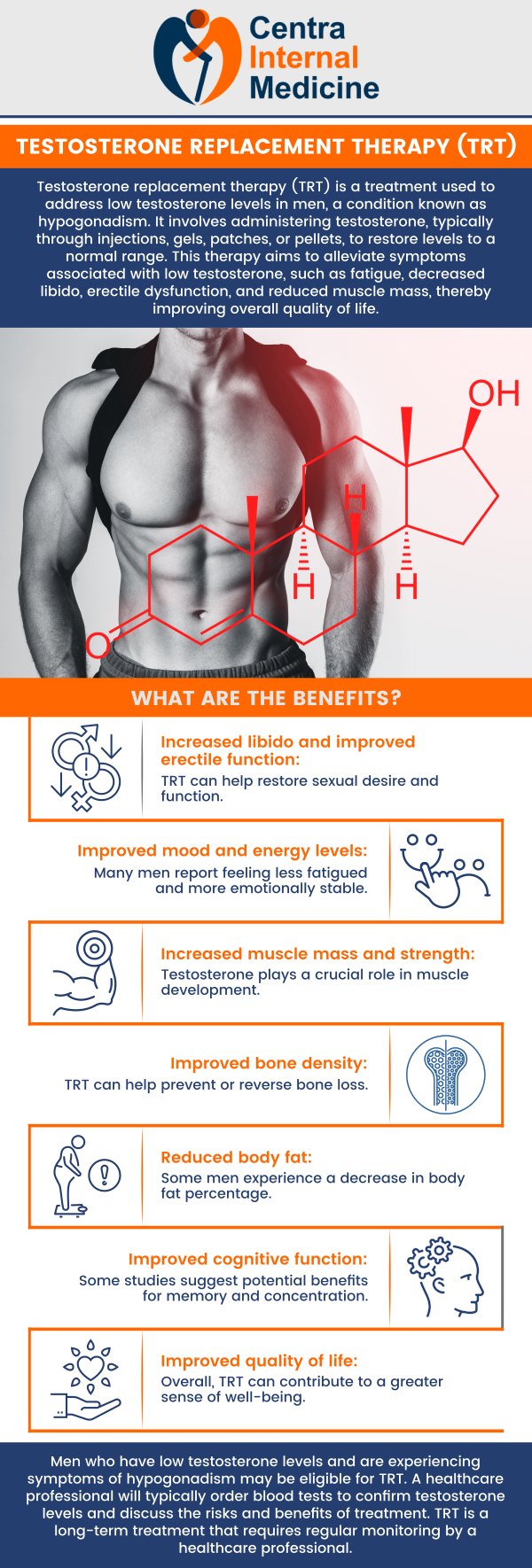
Table of Contents:
How are testosterone levels tested before TRT?
Why is follow-up testing important after starting TRT?
When might a TRT dose or treatment method need adjustment?
What are the possible side effects of TRT?
Dr. Manish Sahni’s Approach to TRT Testing at Centra Internal Medicine
At Centra Internal Medicine, we evaluate testosterone levels using a simple blood test, typically performed in the morning between 7:00 and 10:00 AM, when testosterone levels are naturally at their highest. If you are experiencing symptoms of low testosterone, our providers will begin with a comprehensive review of your symptoms and medical history. Based on this assessment, your Centra Internal Medicine healthcare provider may order a blood test to measure your total testosterone levels.
Because testosterone levels can fluctuate from day to day, our physicians may recommend repeating the test on a separate morning to confirm the results. In some cases, we may also check your free testosterone—the portion of testosterone not bound to proteins in your blood—for a more complete assessment. Additional related blood tests, such as luteinizing hormone (LH), follicle-stimulating hormone (FSH), and prolactin, may be ordered to help identify the root cause of low testosterone levels. Depending on your individual circumstances, fasting may be required before your blood draw; our team will provide you with clear instructions beforehand.
At Centra Internal Medicine, we interpret your results in the context of your symptoms and overall health, ensuring you receive a thorough and accurate diagnosis. Testosterone replacement therapy (TRT) is only considered when both low testosterone and related symptoms are present. Our goal is to provide personalized, evidence-based care, so you receive the treatment that’s right for you.
At Centra Internal Medicine, follow-up testing is a vital part of our approach to testosterone replacement therapy (TRT). We are committed to ensuring that every patient receives safe, effective, and individualized care throughout their treatment journey.
When you start TRT at Centra Internal Medicine, your testosterone levels are supplemented to help address symptoms of low testosterone. However, everyone’s body responds differently. That’s why our providers schedule regular follow-up appointments and blood tests — to make sure your testosterone levels are within the optimal range and to fine-tune your dosage if necessary.
Follow-up testing at Centra Internal Medicine also allows us to keep a close eye on your overall health. TRT can affect red blood cell counts, cholesterol levels, liver function, and prostate health. Our team monitors these important markers to catch potential side effects—such as polycythemia (high red blood cell count), changes in cholesterol, or early signs of prostate issues—before they become serious.
These ongoing check-ins also give you time to discuss any symptoms, improvements, or concerns with your provider. This collaborative, patient-centered approach helps us ensure you receive the maximum benefit from TRT while we minimize any risks, always tailoring your care to your specific needs.
At Centra Internal Medicine, we understand that testosterone replacement therapy (TRT) must be individualized to meet each patient’s specific needs. Our team closely monitors your progress because hormone levels, symptoms, and potential side effects can change over time. Regular blood tests allow us to check that your testosterone levels remain within the recommended range. If your levels are too high or too low, our healthcare providers may suggest adjusting your dose or considering a different method of administration.
If you continue to experience symptoms of low testosterone—such as persistent fatigue, decreased libido, or mood changes—despite ongoing treatment, our providers will work with you to reassess and modify your therapy as needed. Likewise, if you notice signs of excessive testosterone, like increased aggression, acne, or elevated red blood cell counts, we will carefully reevaluate your regimen to prioritize your safety.
There are other reasons why adjustments to your TRT may be necessary. If you develop side effects such as gynecomastia (breast tissue growth), worsening sleep apnea, or abnormal changes in cholesterol or liver function, our team at Centra Internal Medicine will recommend the appropriate next steps. Additionally, if you experience discomfort with your current treatment—such as skin irritation from gels or difficulty with injections—we can explore alternative options, including patches or long-acting therapies.
Your overall health, any new medical conditions, or changes in other medications can also influence how your body responds to testosterone therapy. That’s why ongoing communication and regular follow-ups with our specialists are so important. If you have any concerns or notice unexpected changes, don’t hesitate to reach out to Centra Internal Medicine. Our goal is to ensure your treatment remains both safe and effective, supporting your long-term health and well-being.
Potential Side Effects of TRT
Some men may experience acne or oily skin due to increased testosterone stimulating the sebaceous glands. Fluid retention—sometimes noticed as swelling in the ankles or feet—can also occur. TRT may increase red blood cell production, which, in rare cases, can raise the risk of blood clots. For this reason, regular blood tests and monitoring are an essential part of your care at Centra Internal Medicine.
Other possible side effects include sleep disturbances, such as the development or worsening of sleep apnea, and breast tenderness or enlargement (gynecomastia). TRT can also impact fertility by reducing sperm production and causing testicular shrinkage over time. In men with existing prostate conditions, such as benign prostatic hyperplasia (BPH), TRT may worsen symptoms, and there are rare concerns about stimulating the growth of prostate cancer. Changes in cholesterol levels and liver function are additional considerations, and these are routinely monitored as part of your treatment plan.
If you are considering or currently receiving TRT, it’s important to communicate any new symptoms or concerns with your provider. Our experienced team is dedicated to closely monitoring your health, adjusting your therapy as needed, and ensuring your safety and well-being throughout your treatment. We are here to answer your questions and help you make informed decisions about your care.
At Centra Internal Medicine, careful oversight is crucial to making your Testosterone Replacement Therapy (TRT) both safe and successful. Board-certified physician Dr. Manish Sahni, MD, alongside his expert team, focuses on delivering a deeply personalized healthcare experience. Prior to initiating your therapy, they will conduct thorough blood panels to carefully assess your starting hormone levels, red blood cell counts, and vital health indicators.
Once your personalized treatment plan begins, Dr. Sahni schedules routine follow-up lab work and clinical evaluations. This ongoing monitoring allows the team to precisely adjust your dosage, maximizing your symptom relief while minimizing any potential side effects. By combining the latest medical technology with attentive, compassionate care, Centra Internal Medicine ensures your hormone health is expertly and safely managed every step of the way.
If you would like to learn more about TRT or discuss your symptoms, please contact Centra Internal Medicine to schedule an appointment. Your health and peace of mind are our top priorities. We are located at 1003 Division Street Suite 4, Prescott, AZ 86301. We serve patients from Prescott AZ, Iron Springs AZ, Williamson AZ, Diamond Valley AZ, Prescott Valley AZ, and surrounding areas.
Check Out Our 5 Star Reviews


Additional Services You May Need
▸ Aesthetics
▸ Allergies
▸ Annual Physical Exams
▸ Gynecological Exams
▸ High Blood Pressure
▸ Immunizations
▸ Joint Injections
▸ Lab Services
▸ Migraines
▸ Minor Surgical Procedures
▸ Pre-op Clearance Exams
▸ Double Chin
▸ Acute Disease Management
▸ CDL Physical Exam
▸ Tirzepatide
▸ Phentermine
▸ Nutritional Coaching
▸ DOT Physicals
▸ FDA-Approved Oral Semaglutide (GLP-1)

Additional Services You May Need
▸ Aesthetics
▸ Allergies
▸ Annual Physical Exams
▸ Gynecological Exams
▸ High Blood Pressure
▸ Immunizations
▸ Joint Injections
▸ Lab Services
▸ Migraines
▸ Minor Surgical Procedures
▸ Pre-op Clearance Exams
▸ Double Chin
▸ Acute Disease Management
▸ Mole Removal
▸ Primary Care
▸ Same Day Appointments
▸ Sculpsure
▸ Sick Visits
▸ Wound Care
▸ TempSure
▸ Testosterone Replacement Therapy
▸ Telemedicine
▸ Weight Management
▸ Wellness
▸ Women’s Health
▸ Chronic Disease Management
▸ CDL Physical Exam
▸ Auto Accident Injury
▸ Tirzepatide
▸ Semaglutide
▸ Phentermine
▸ Contrave
▸ Nutritional Coaching
▸ DOT Physicals
▸ Vaccinations
▸ FDA-Approved Oral Semaglutide (GLP-1)


 Send Text
 How May I Help You?